Press Release of Aliansi Zero Waste Indonesia (AZWI)

For Immediate Release
Jakarta, October 22, 2025 – Aliansi Zero Waste Indonesia (AZWI) rejects Presidential Regulation (Perpres) No. 109 of 2025 on the Acceleration of Waste-to-Energy (PSEL) Development, citing the lack of public consultation and its potential to pave the way for costly incinerator projects with high fiscal risks. The policy contradicts the national strategy for waste reduction at the source, risks entangling state finances through expensive long-term contracts, worsens pollution, threatens the livelihoods of millions of informal workers, and violates the mandate of Law No. 18 of 2008.
Behind the narratives of “clean energy” and “modernizing waste management” involving PLN and Danantara lies a hidden pseudo-subsidy scheme that could drain tens of trillions of rupiah over the next 30 years. Each PSEL project with a capacity of 1,000 tons per day could burden PLN with up to IDR 600 billion per year, creating a fiscal trap risk through long-term contracts.
“This regulation is not a proper solution but an extension of the failure of Perpres 35/2018, which has proven to be economically and technically unfeasible. The new version instead raises tariffs and extends contract durations, creating the illusion of profitability while actually burdening PLN and the state budget (APBN) and posing significant environmental risks,” said Atha Rasyadi, Urban Campaign Team Leader at Greenpeace Indonesia.
This Perpres was drafted without a comprehensive feasibility analysis comparing PSEL to alternative waste management scenarios, whether in terms of funding or the local governments’ operational capacities. The large budget allocation for this project could reduce local governments’ ability to manage daily waste operations. If PSEL were implemented under proper emission and safety standards, the waste processing cost per ton would become prohibitively expensive, far exceeding the fiscal capacity of most local governments, which averages below IDR 500,000 per ton.
A recent study by Wiralodra University in Indramayu found that the ideal waste management cost ranges between IDR 265,000 and IDR 308,000 per ton and could rise to IDR 1 million per ton for intensive processing. This gap indicates massive externalization of costs, with environmental and social burdens borne by communities while profits are captured by a few.
Dwi Sawung, National Executive Campaign Manager for Infrastructure and Spatial Planning at WALHI, stressed that PSEL technology is the most expensive option if low emission standards are to be met: “PSEL requires huge investments and high operational costs. For incinerators, both capex and opex are borne by PLN or subsidized by the central government. However, most local governments still struggle to fund basic waste collection systems. This scheme risks locking up public budgets in the long term,” he said.
From a technical perspective, most Indonesian cities lack sufficient waste generation to meet the 1,000 ton/day capacity of an incinerator. More than 60% of Indonesia’s waste consists of organic matter with high moisture content and low calorific value, making it unsuitable for burning.
“Emission monitoring from stationary sources such as PSEL facilities in Indonesia is extremely weak and largely symbolic. There is no continuous and transparent monitoring system for dioxins, furans, and heavy metals as required in many other countries. Current regulations from the Ministry of Environment only require testing for dioxin and furan emissions—both known carcinogens—once every five years. This rule puts the public at serious risk, since dioxins and furans can be released at any time when furnace temperatures drop or fuel becomes unstable. Without real-time monitoring and public data access, PSEL plants become new poison factories rather than waste management solutions,” emphasized Yuyun Ismawati, Senior Advisor at Nexus3 Foundation
From a social perspective, similar projects in Indonesia have shown recurring patterns of failure. The Putri Cempo WtE project in Solo has faced investment setbacks, social conflicts, and technical problems. “Since the start of the Putri Cempo WtE project, the voices and roles of the informal sector have been ignored, with no consideration for their involvement in waste management plans. Waste pickers, who for decades have been at the forefront of sorting and recycling, lost their livelihoods because all waste is diverted to the burning facility, even though much of it should never be incinerated. This clearly demonstrates that such projects fail not only technically but also in upholding social and economic justice at the local level,” said Titik Sasanti, Director of Yayasan Gita Pertiwi.
Zero Waste Solutions from the Source
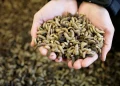
The solution to the waste crisis does not lie in burning waste but in systemic upstream changes, strengthening source reduction policies, restricting single-use products from production onward, and expanding segregation systems that empower communities to participate actively. About 60% of Indonesia’s organic waste can be managed without burning, through composting, maggot cultivation, or community-based biogas.
“Waste management models developed by members of AZWI show alternative systems that provide greater community benefits. Beyond waste pickers, there are urban farmers, livestock breeders, and maggot communities, these are the real actors eliminating waste. Yet they remain unrecognized and unsupported by the government,” said Fictor Ferdinand, Operations Director of YPBB.
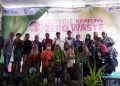
The Zero Waste Cities models in Bandung, Denpasar, and Gresik have proven that community-based approaches are far more inclusive and sustainable than the high-risk, resource-intensive PSEL technology. A faster and more appropriate solution is to accelerate waste segregation and implement Ministerial Regulation LHK No. 75/2019 on producer waste reduction roadmaps. “The biggest barrier actually lies in governance readiness for waste management and reduction, not in processing technology,” Fictor added.
“If the government does not immediately enact strict regulations requiring everyone to sort their waste and provide the necessary infrastructure for segregated collection and transportation at the source, Indonesia’s waste crisis will never be resolved. Mismanaged waste will continue to be dumped into rivers and the sea. Source segregation is the key prerequisite for local waste processing. When management systems instead promote burning rather than segregation, we are essentially igniting air pollution and spreading dioxins and microplastics across all environmental media and the human food chain,” said Daru Setyorini, Director of Ecoton.
AZWI’s Calls to the Government
- Conduct comprehensive feasibility studies with strong planning at the national, provincial, and local levels to mitigate implementation risks.
- Undertake data-driven and comprehensive assessments comparing alternative waste management approaches, including segregation and composting, to ensure policies truly support effectiveness, fairness, and sustainability.
- Revoke Presidential Regulation No. 109 of 2025 until independent and transparent fiscal and environmental audits are completed.
- Disclose all WtE contracts and financing schemes transparently and hold public consultations, including details on tipping fees, funding sources, and subsidy allocations, to prevent fiscal risks and corruption.
- Redirect public subsidies and investments toward source-based solutions such as segregation, composting, maggot cultivation, community biogas, reuse, and recycling programs that are proven to be more effective and socially just.
- Strengthen environmental monitoring and supervision systems, including real-time, publicly accessible measurements of dioxins, furans, heavy metals, and toxic ash emissions, to prevent pollution leaks from combustion facilities.
— END –
Contact:
Kia, Comms Officer AZWI, Phone: 0852 1580 9537
About Aliansi Zero Waste Indonesia (AZWI)
Aliansi Zero Waste Indonesia (AZWI) is a network of organizations advocating for the proper implementation of the Zero Waste concept through various programs and initiatives. AZWI is committed to promoting sustainable waste management policies and practices based on the principles of the waste hierarchy and the material life cycle.
Website: aliansizerowaste.id